- Elvis's Newsletter
- Posts
- How I made 5 viral tweets in one day
How I made 5 viral tweets in one day
(After getting 77 views the day before)

Elvis Sun
January 17, 2026
On January 4th, I decided to revive my dead Twitter account after a 6 months break.
I wrote a post. Put some thought into it. Hit publish.
77 views.
Cool. Back to irrelevance.
The next day, I tried something different.
Instead of creating original content and hoping people would find it, I went hunting for content that was already getting attention.
The result? 5 viral tweets in a single day, 602k views total.
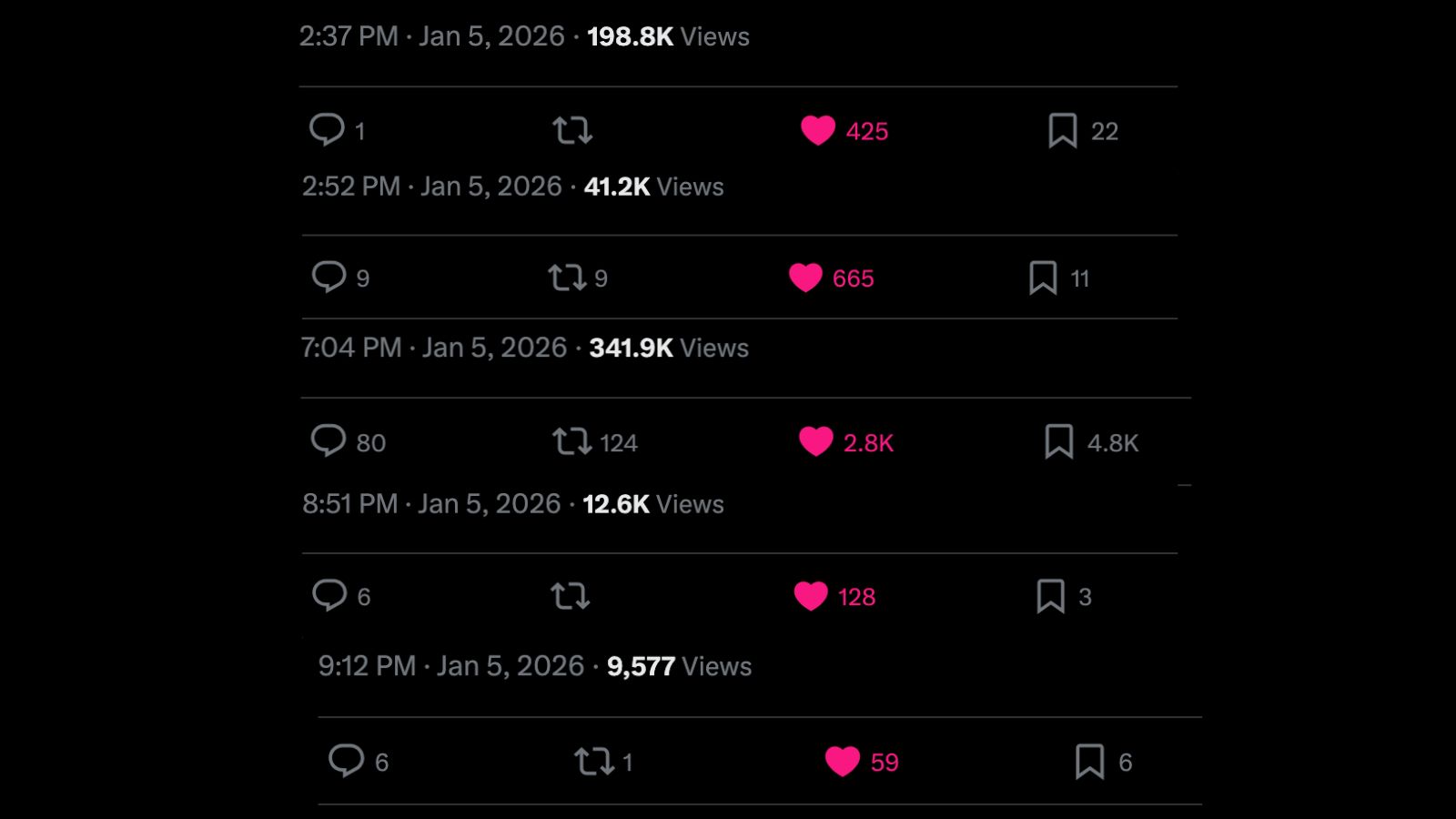
Same account. Same followers. Completely different results.
What changed?
The Cheat Code: Newsjacking
Newsjacking is simple: instead of creating momentum, you steal it.
You find something that's already trending up - a viral tweet, a breaking story, a controversial take - and you attach yourself to it.
Why does this work?
The audience already exists. You're not shouting into the void. You're joining a conversation thousands of people are already watching.
The algorithm rewards you. Replies and quote tweets to viral content get pushed to more eyeballs because the original post is already "approved" by the algorithm.
Lower creative burden. You don't need to invent a topic. You just need a smart take on what's already happening.
On January 5th, I wasn't more creative than January 4th. I was just more strategic about where I put my creativity.
Here's the playbook I ran:
step 1: find topics trending up
step 2: comment/post using one of my psychological triggers below
5 Psychological Triggers Behind Viral Comments
Let me break down what actually made each tweet work.
1. The Polarizing Promise
My Claude Code heartbeat hack hit 339k views and 4.8k bookmarks.
Claude Code has been the hottest topic this month. You can’t get past 3 tweets without seeing the word “Claude Code”.
The setup was dead simple - a script I had Claude itself throw together in 30 seconds. But here's what made it spread:
First, I didn't mention Claude Code by name. Just referenced "the 5hr limit." Every power user knows exactly what I'm talking about. It creates an in-group feeling - like you're part of a secret club that just got let in on a hack.
Second, it was intentionally shared as an image, people who can actually read code feels smart reading it. Yet again amplifying this in-group feeling once they get it.
Third, I used the word "never" in "never hit the 5hr limit."
I never hit the limit myself after this hack. But do I actually believe running this script guarantees you'll never hit the limit? Of course not. But that's exactly the point.
As Justin Welsh says: for content to spread on social media, it needs to be a little polarizing. This same idea is repeated over and over by a lot of people who has mastered the attention game - Mr. Beast, and Ryan Holiday.
"Never" creates curiosity. It makes people stop and think "wait, really?" Then they read the code in screenshot, understand the hack, and get that aha moment. That's when they engage.